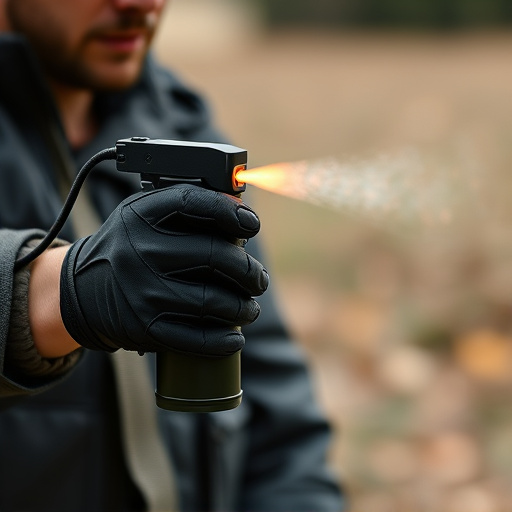
Military-grade pepper spray formulas, rigorously tested by the military, are powerful tools for crowd control due to their high performance standards and strategic active ingredient balance. These formulations provide a strong irritant effect without causing permanent harm, making them a preferred choice worldwide. In crowd control scenarios, trained officers should employ long-range spraying techniques, target specific individuals, and use minimal amounts while implementing perimeter security measures and coordinating with emergency services to ensure public safety and minimize bystander impact. Regular training sessions enhance officer preparedness.
In recent years, military-grade pepper spray formulas have emerged as a powerful tool in crowd control tactics. This article delves into the comprehensive overview of understanding pepper spray, focusing on its military-grade formulations and their precise application. We explore effective implementation strategies to ensure safe use while minimizing impact on bystanders. Discover how these advanced formulas are revolutionizing public safety, offering both power and precision in crowd control scenarios.
- Understanding Pepper Spray: A Comprehensive Overview
- Military-Grade Formulas: Power and Precision in Crowd Control
- Effective Implementation: Strategies for Safe Use and Minimal Impact on Bystanders
Understanding Pepper Spray: A Comprehensive Overview
Pepper spray, a powerful crowd control agent, has been a staple in law enforcement arsenals for decades. At its core, pepper spray is a type of irritant that temporarily disables individuals by causing intense pain and discomfort in the eyes, nose, and respiratory system. The active ingredient in most pepper sprays is capsaicin, derived from chili peppers. Military-grade pepper spray formulas are known for their potency and effectiveness, often containing higher concentrations of capsaicin to ensure swift and reliable results.
These advanced formulations are designed to be non-lethal but highly disruptive, giving police officers a critical tool in managing large crowds or volatile situations. The use of pepper spray is carefully regulated and typically employed as a last resort when other de-escalation tactics have failed. Understanding the mechanics behind its action, the various types available, and the proper usage protocols is essential for both law enforcement agencies and the general public to ensure safety and efficacy in crowd control scenarios.
Military-Grade Formulas: Power and Precision in Crowd Control
Pepper spray, a powerful crowd control tool, has evolved significantly over time, with military-grade formulas now available for law enforcement and security personnel. These advanced formulations offer precise and effective control in high-pressure situations, ensuring the safety of both officers and crowds. The military’s rigorous testing standards ensure these products meet the highest performance criteria, providing a reliable solution for managing large gatherings where de-escalation is crucial.
The precision and power inherent in military-grade pepper spray formulas are attributed to their active ingredients, which are carefully balanced to deliver a strong irritant effect without causing permanent harm. This strategic balance allows officers to control chaotic scenarios while minimizing the risk of long-term injury among bystanders or protesters. The effectiveness of these formulations has made them a preferred choice for agencies worldwide, contributing to more efficient and safer crowd management practices.
Effective Implementation: Strategies for Safe Use and Minimal Impact on Bystanders
In crowd control situations, effective implementation of pepper spray requires a balanced approach to ensure safety and minimize impact on bystanders. Military-grade pepper spray formulas are designed to be potent, providing quick disablement while allowing for clear de-escalation. Trained officers should utilize these strategies: employing long-range spraying techniques to prevent direct contact, targeting specific individuals rather than broad areas, and using the smallest amount necessary to achieve control.
Additionally, setting up a safe perimeter helps contain the situation. This includes positioning bystanders away from the immediate area, utilizing barriers like fences or vehicles, and coordinating with emergency services for support. Regular training sessions focusing on these strategies ensure officers are prepared to handle crowds efficiently while maintaining public safety and minimizing exposure to non-threats.
In conclusion, while military-grade pepper spray formulas offer powerful crowd control tools, their effective implementation demands careful strategy to ensure safety and minimize impact on bystanders. Understanding the comprehensive overview of pepper spray, its precise use in crowd control, and adopting best practices are essential steps towards responsible and effective deployment.